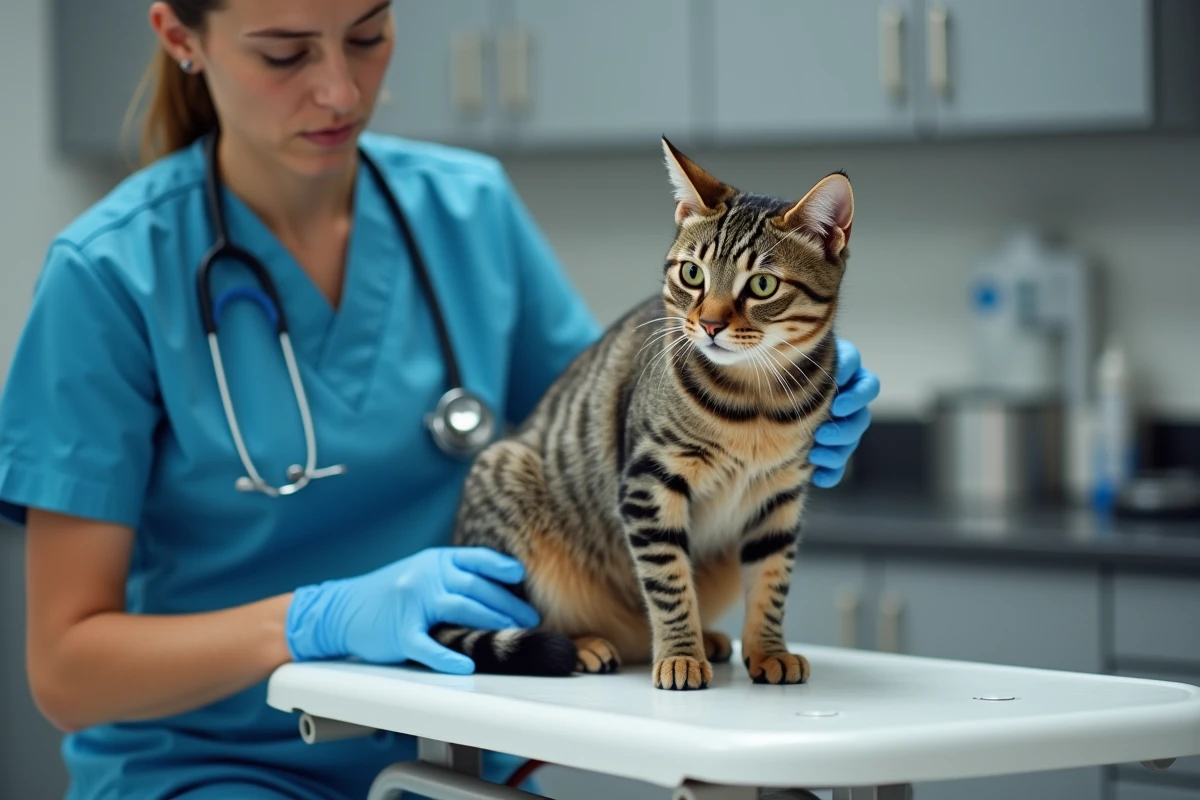
A cat that emits an unpleasant odor from the anal area poses a common but rarely trivial problem. Behind this bad smell lie specific physiological mechanisms related to the anal glands, digestion, or the cat’s ability to groom itself. Identifying the real cause helps avoid inappropriate treatments and provides lasting relief for the animal.
Food allergies and anal odors in cats: an underestimated lead
Veterinarians have observed in recent years that food allergies or intolerances sometimes manifest solely as soft, very odorous stools and excessive licking of the anal area. No other skin signs accompany these cases, which delays diagnosis.
Beef proteins, milk, and certain additives are among the most documented triggers. The usual reflex is to repeatedly empty the anal glands, but this approach does not address the root of the problem. Specialists now more systematically recommend supervised elimination diet trials by a veterinarian before considering other interventions.
A cat that smells bad from its rear end therefore deserves a thorough dietary examination. Several clinics report that by offering solutions for a cat that smells bad from its rear focused on nutrition, results appear within weeks when switching to highly digestible or fiber-enriched kibble.
Blocked anal glands in cats: mechanism and warning signs
Each cat has two anal sacs located on either side of the anus. These small pouches produce a foul-smelling secretion, normally expelled during the passage of stools. This substance contains pheromones that serve for territorial marking and communication between cats.
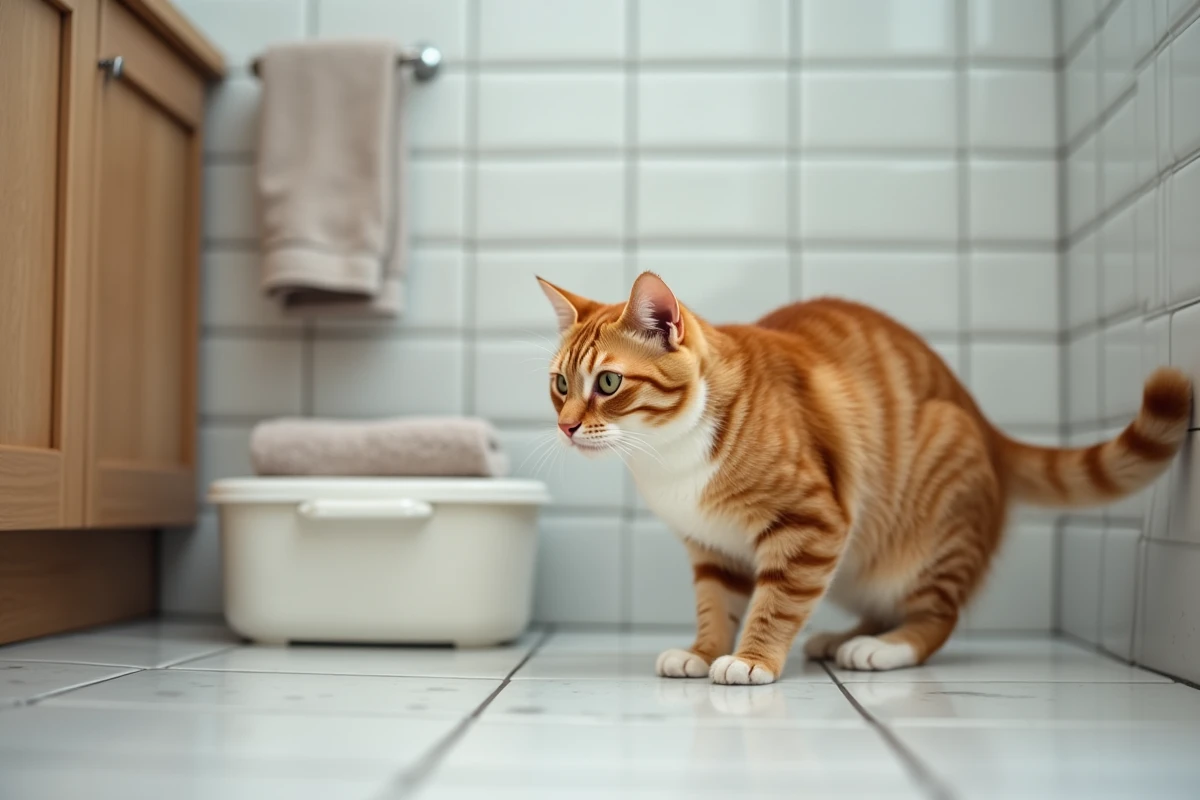
When the contents do not evacuate properly, the glands fill up and cause increasing discomfort. The animal drags its rear end on the ground (scooting), compulsively licks the anal area, or emits a very pronounced fishy odor from its rear.
From congestion to infection
The progression follows a gradual pattern:
- Impaction: the glands remain full without being able to empty, causing discomfort and persistent odor.
- Sacculitis: inflammation sets in, with redness, local pain, and sometimes a brown or greenish discharge.
- Abscess: without treatment, the infection can form an abscess that may rupture through the skin, requiring prompt veterinary care.
A stressed cat may also spontaneously expel the contents of its anal glands during an anxiety-inducing situation (moving, sudden noise, encounter with another animal). This abrupt emptying releases a particularly strong odor but does not necessarily indicate a medical problem.
Joint pain and inadequate grooming: an overlooked factor
The ISFM recommends systematically assessing mobility and joint pain in any cat presenting a localized bad odor from the rear. A cat suffering from lower back or hip pain can no longer contort itself sufficiently to clean its anal area.
This factor particularly affects older or overweight cats. The odor then does not come from an anal pathology but from a hygiene deficiency related to pain. Treating joint discomfort (anti-inflammatories prescribed by the veterinarian, environmental adjustments) often suffices to resolve the odor issue.
Obese cats face two challenges: the mechanical difficulty of reaching their rear end and a higher likelihood of soft stools, which promote anal gland congestion.
Diet and fermentable fibers: reducing odors at the source
The quality of the diet directly influences stool consistency and, by extension, the proper functioning of the anal glands. Stools that are too soft do not compress the anal sacs sufficiently during passage, preventing their natural emptying.
Recent nutritional recommendations emphasize the importance of foods rich in fermentable fibers (prebiotics) for sensitive cats. These fibers nourish the intestinal microbiome and improve stool firmness.
Litter and environment: details that matter
Very dusty or heavily scented litters can irritate the perianal area and exacerbate existing discomfort. A neutral litter, changed regularly, limits secondary irritations.
The environment also plays an indirect role. A cat that does not have access to a clean litter box may hold its stools, which alters their consistency and disrupts the anal gland emptying cycle.
When to consult a veterinarian for a smelly cat
Not all anal odors warrant an emergency visit. However, certain signals should prompt a quick consultation:
- A visible discharge around the anus (brownish, greenish, or bloody).
- Swelling or marked redness on one side of the anus.
- Refusal to sit, pain upon touch, or decreased appetite accompanying the odor.
- A persistent odor despite dietary changes made over several weeks.
The veterinarian will perform a rectal examination to assess the state of the glands and may suggest manual emptying if necessary. In recurrent cases, a comprehensive dietary assessment and examination of joint mobility can help identify the underlying cause rather than just treating the symptom.
A cat that smells bad from its rear sends a signal that should be interpreted as an indicator of overall health: digestive, joint, or behavioral. Treating the odor without seeking its origin amounts to masking a problem that will worsen.