Cooking is an art where precision can make all the difference. Recipes often feature varied measurements, ranging from grams to cups, including ounces and milliliters. To avoid mistakes that can ruin a dish, mastering conversions is essential.
Some simple tips can greatly ease this task. For example, one cup is approximately 240 milliliters, and one tablespoon is 15 milliliters. Using tools like conversion charts or digital scales can also simplify things and ensure accuracy, thus guaranteeing delicious results every time.
Mastering Measurement Conversions for Foolproof Recipes
Converting measurements in cooking is often a challenge. To avoid errors, use proven tools and techniques. The conversion chart is a valuable ally, especially when you need to convert units like milliliters to centiliters. For instance, the conversion of 125 ml to cl is easily done by dividing by 10, resulting in 12.5 cl.
Liquid and Solid Measurements
Liquid measurements include:
- Milliliters (ml)
- Centiliters (cl)
- Liters (l)
Solid measurements are measured in:
- Grams (g)
- Kilograms (kg)
Essential Tools
For precise measurements:
- Kitchen scale: for weighing solid ingredients
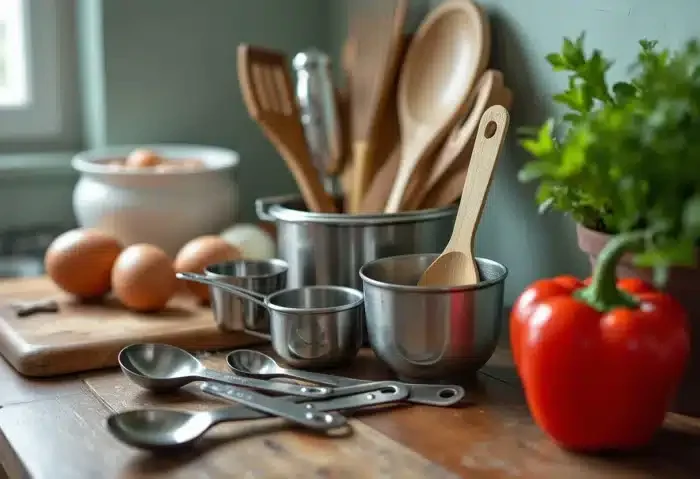
- Measuring cup: for accurately measuring liquids
- Measuring spoons: for small quantities of dry or liquid ingredients
Examples of Common Conversions
| Unit | Equivalence |
|---|---|
| 1 teaspoon | 5 ml |
| 1 tablespoon | 15 ml |
| 1 cup of tea | 20 cl |
| 1 medium glass | 10 cl |
Mobile applications can also be a handy tool for converting measurement units in a flash. Consider integrating these techniques and tools into your cooking routine to ensure foolproof recipes.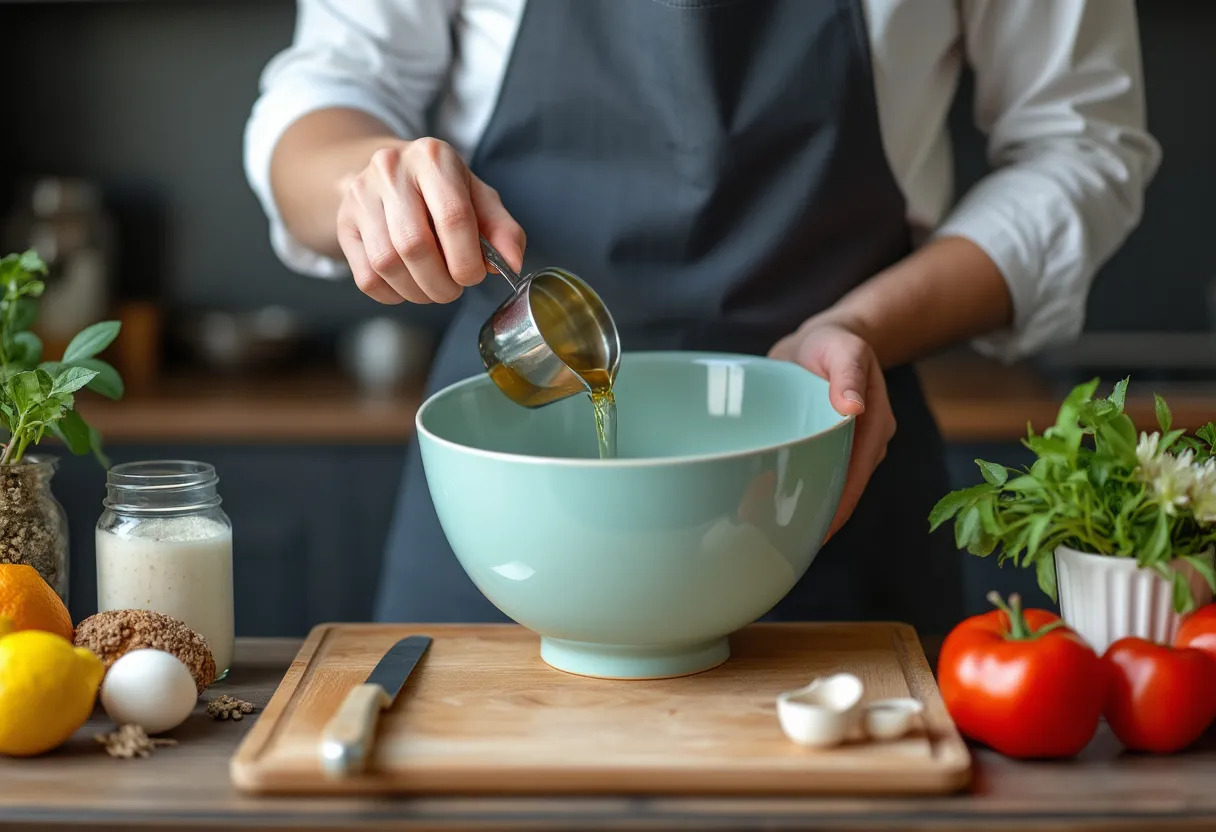
The Essential Tools and Techniques for Culinary Precision
Indispensable Measuring Utensils
To achieve precise results in cooking, use a kitchen scale. It allows you to measure solid ingredients with remarkable accuracy. The measuring cup is also fundamental for liquid measurements. One tablespoon equals 15 ml, while one teaspoon contains 5 ml.
- Kitchen scale: for solids
- Measuring cup: for liquids
- Measuring spoons: for small quantities
Using Conversion Charts and Applications
Conversion charts are invaluable resources. They allow you to convert measurement units quickly and efficiently. Mobile applications offer a modern and convenient solution. They are particularly useful for complex conversions, such as converting grams to milliliters or Celsius to Fahrenheit.
Some Common Equivalences
To make your cooking easier, memorize these conversions:
- 1 cup of flour = 120 g
- 1 cup of sugar = 200 g
- 1 cup of liquid = 250 ml
Techniques to Avoid Measurement Errors
When using a kitchen scale, be sure to tare regularly to exclude the weight of the container. For liquid measurements, place the measuring cup on a flat surface and check the level at eye level. Follow these tips to ensure accurate results and avoid conversion errors.