Decorating an interior is not just about choosing a nice sofa or repainting a wall. Recent research in neuro-architecture shows that the arrangement of furniture, color contrasts, and even the acoustics of a room directly affect the level of stress experienced on a daily basis. Understanding these mechanisms allows for more precise choices in furnishing a home without necessarily increasing the budget.
Sensory load and layout: what neuro-architecture changes in decor
The book Neuro-Architecture: Designing with the Mind in Mind by Anjan Chatterjee and Oshin Vartanian (Springer, 2024) documents concrete cases of homes redesigned to reduce the sensory load of occupants. The principle relies on three levers: color palette, light intensity, and acoustic treatment of surfaces.
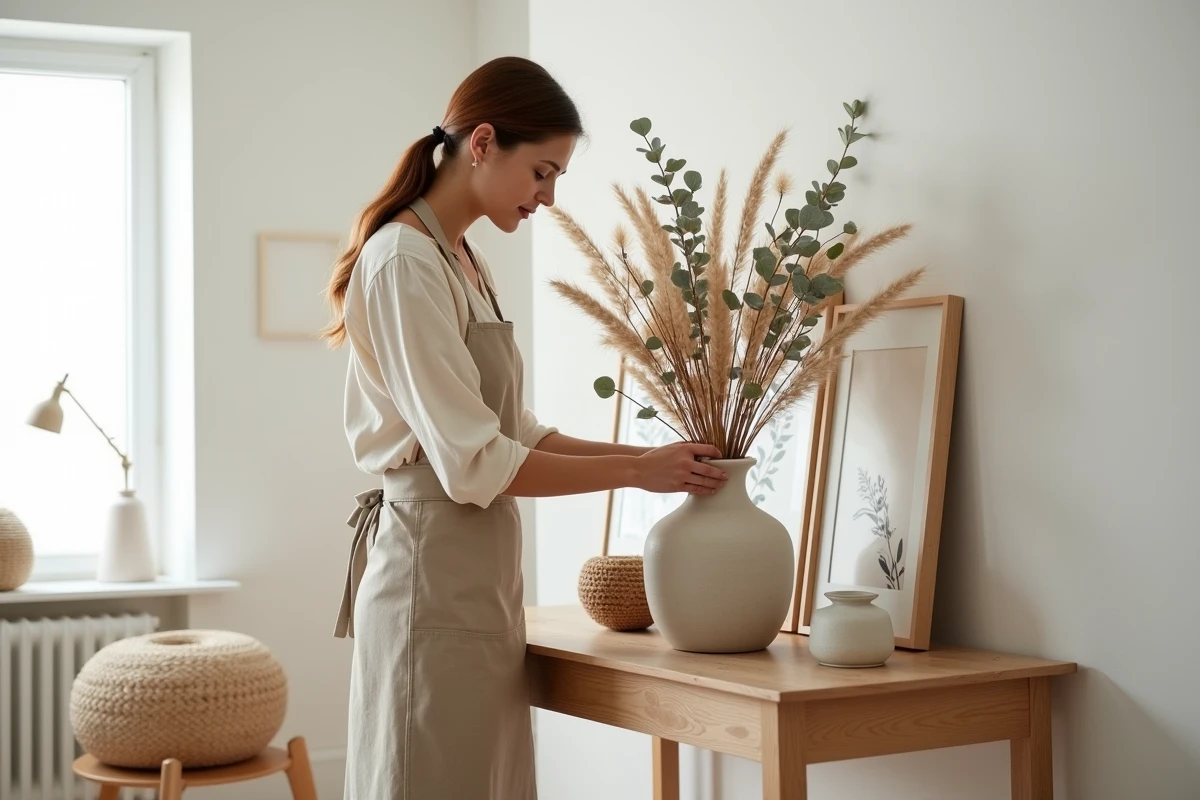
A room with harsh contrasts (a dark wall facing a bright white wall, for example) demands more from the visual system than a gradient of similar tones. In practical terms, this guides color choices towards tighter palettes, with a maximum difference of two to three shades between the lightest and darkest surfaces in the same space.
So-called “refuge” visual areas, such as a slightly recessed reading nook or a built-in alcove, function as decompression zones. No need for partitions: a simple change of flooring or a low light fixture is enough to define this area. This type of layout applies equally to a bedroom or a living room open to the kitchen.
For those looking for concrete ideas by room, you can access Sarkostique for the home and browse proposals organized by type of space.
Second-hand furniture and circularity: a structural choice criterion
The Global Furniture and Homeware Market Report 2024 from Statista confirms a clear trend: the share of European consumers favoring second-hand items is significantly increasing, particularly among the 25-44 age group. Buying refurbished furniture is no longer a budget compromise; it is a conscious purchasing reflex.
This shift has direct consequences on the way we decorate. A vintage piece imposes constraints on dimensions and finishes that require composing rather than reproducing a catalog. The result is often more unique than a space furnished in a single order.
Second-hand or new: when to choose what
| Type of furniture | Relevant second-hand | Preferable new |
|---|---|---|
| Solid wood table | Yes, the patina adds character, solid wood ages well | No, unless specific dimensions are needed |
| Sofa with foam seating | To be checked, foam compresses after a few years | Yes, if seating comfort is a priority |
| Designer light fixture | Yes, vintage models are often sturdier | Only for recent integrated LED |
| Bedding (mattress, box spring) | No, hygiene and support cannot be verified | Yes, always |
| Shelves, metal storage | Yes, very durable over time | Only if a custom format is needed |
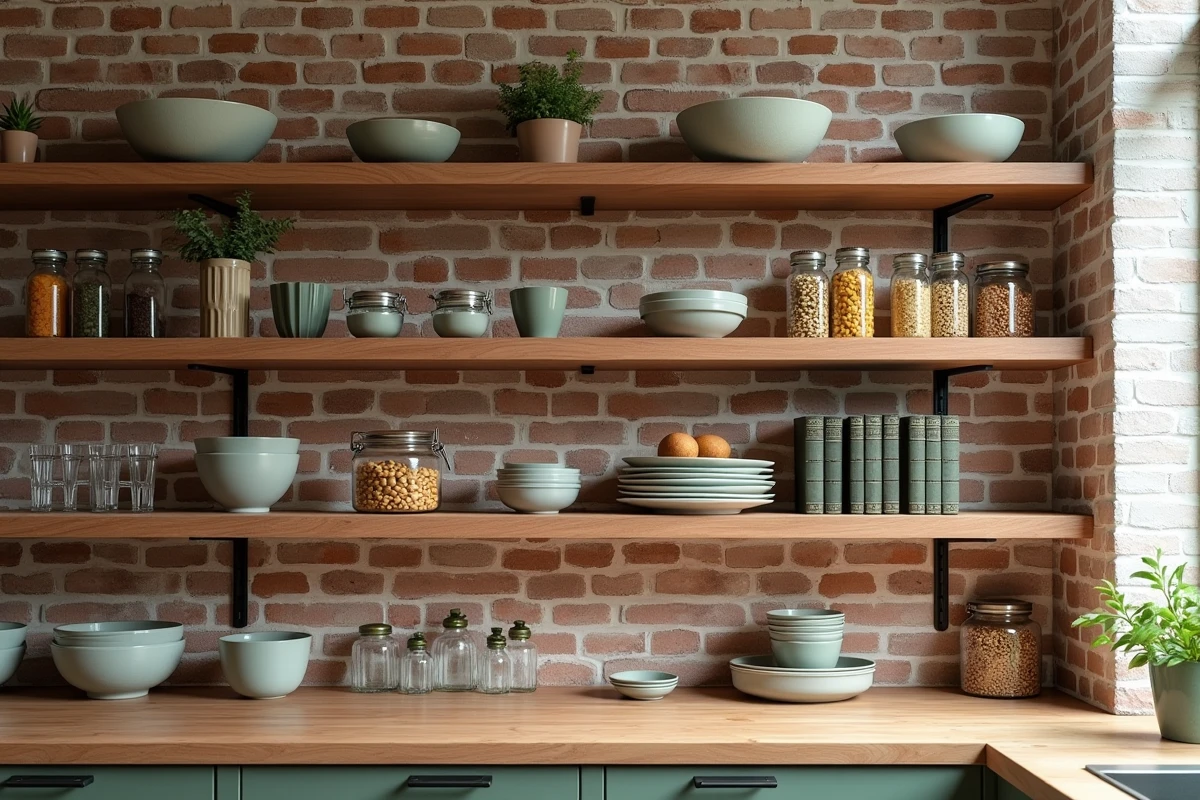
Solid wood, ceramics, linen, or full-grain leather are materials that gain character over time. Melamine particle boards, on the other hand, do not withstand a second life cycle well: edges swell, hinges fail. The material of the furniture determines its relevance in second-hand.
Integrated storage: gaining space without additional furniture
The most effective storage solutions are those that exploit already existing but overlooked volumes. Under a staircase, above a door, within the thickness of a partition wall: these spaces often represent several cubic meters of unused space in a standard home.
- Wall niches between partition studs (usable thickness of 7 to 10 cm) can hold books, frames, or small objects without encroaching on floor space
- A storage box under a raised bed by a few centimeters frees up the equivalent of an entire dresser while keeping the room visually uncluttered
- Open shelves fixed high up (above 1.80 m) store rarely used items, baskets, suitcases, seasonal linens, without cluttering the daily visual field
Every visible storage solution should be considered as a decorative element. A wicker basket on a high shelf contributes to the style as much as to storage. Mismatched cardboard boxes have the opposite effect.
High-impact DIY projects: three concrete interventions
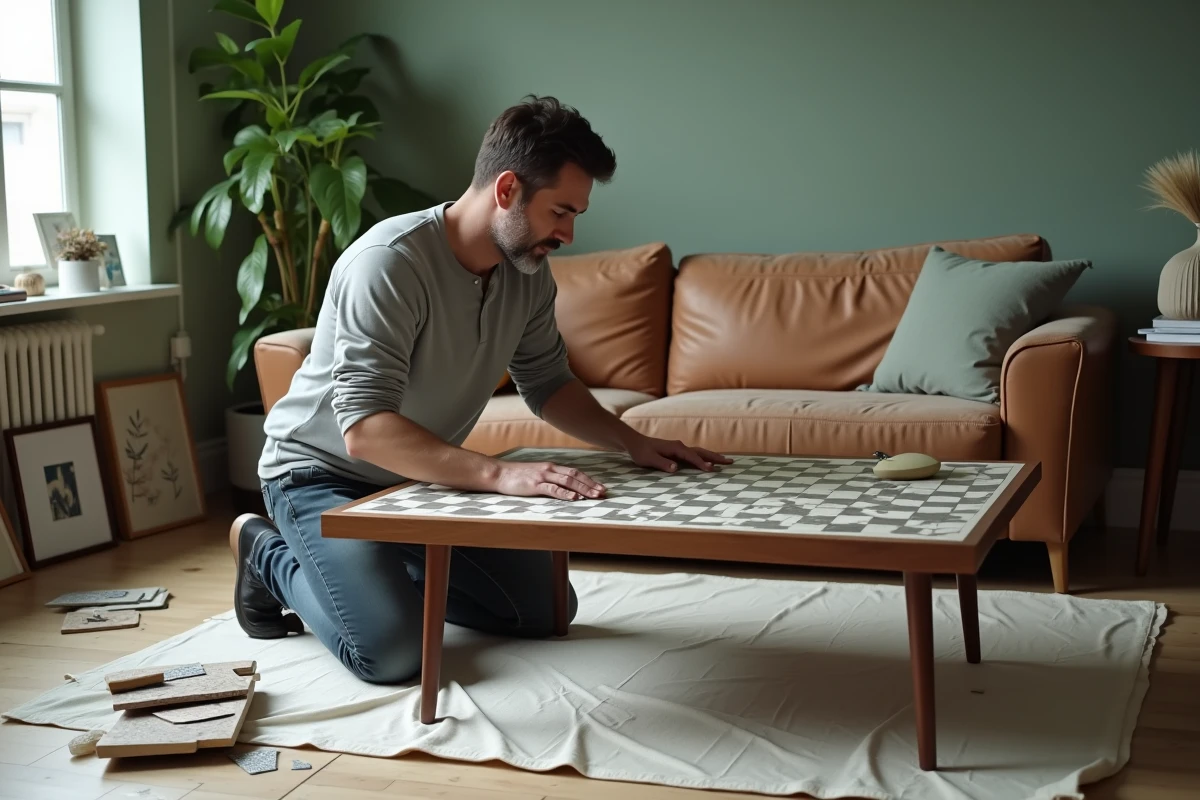
DIY in decoration produces the best results when it targets large surfaces rather than details. Repainting a single wall in a contrasting shade alters the perception of depth in an entire room. Covering a wall with raw wooden slats (fixed vertically, spaced a few centimeters apart) creates a relief that absorbs some sound and visually structures the space.
Making a headboard with reclaimed boards remains one of the most accessible projects. Two hours of work and a few sanded boards are enough to transform a bedroom. The result depends on the consistency of the assembly and the treatment of the wood: a clear wax protects without masking the grain.
Textiles and wall decor: levers not to be overlooked
Textiles have an often underestimated impact. Changing curtains, adding a dense rug, or replacing cushion covers alters the thermal and acoustic perception of a space without touching the walls or furniture. A thick rug in a tiled living room noticeably reduces sound reverberation from the first days.
Wall decor does not require a framed budget. Large-format photo prints, glued onto foam board and fixed with adhesive tabs, can replace traditional frames. The cost is minimal, replacement is easy, and the result is clean if the support is well cut.
Furnishing your home coherently relies less on the amount spent than on understanding a few principles: limit excessive contrasts, choose durable materials suitable for second-hand, exploit hidden volumes for storage, and concentrate DIY efforts on large surfaces. The most effective choices are often the least visible at first glance.