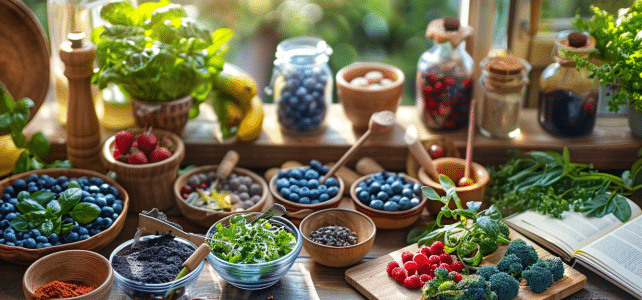
Imagine being able to give your dishes and pastries vibrant colors without using chemicals. Making your own homemade food colorings is a great way to add a personal touch to your culinary creations while ensuring a healthier preparation. It’s a fun activity that allows you to explore the riches of nature.
The fruits, vegetables, and spices in your kitchen can be transformed into natural dyes. For example, beets provide a vibrant red, while spinach produces a bright green. It’s a creative way to make your meals more appetizing while avoiding industrial additives.
How to Make Homemade Food Colorings
Creating your own organic homemade food colorings relies on the use of natural pigments derived from a variety of ingredients. These pigments can be extracted from fruits, vegetables, spices, flowers, and plants. Here’s how to make food coloring in a few simple steps.
Ingredients and Equipment Needed
- Beets for red
- Spinach for green
- Turmeric for yellow
- Red cabbage for purple
- Carrots for orange
- Juicer or centrifuge
Process of Extracting Pigments
To extract pigments from fruits and vegetables, use a juicer or a centrifuge. These tools allow you to separate the juice from the fibers, making it easier to concentrate the colors.
Dilution and Preservation
Dilution is a fundamental step, especially for spices and powders. Adjust the amount of water according to the desired intensity. To preserve the colorings, place them in small airtight bottles and keep them in the refrigerator. White vinegar or baking soda can be added to stabilize certain shades.
Making your own homemade food colorings doesn’t require you to be a chemistry expert. Follow these simple techniques and transform your natural ingredients into true palettes of colors to enhance your culinary creations.
Recipes and Tips for Natural Colorings
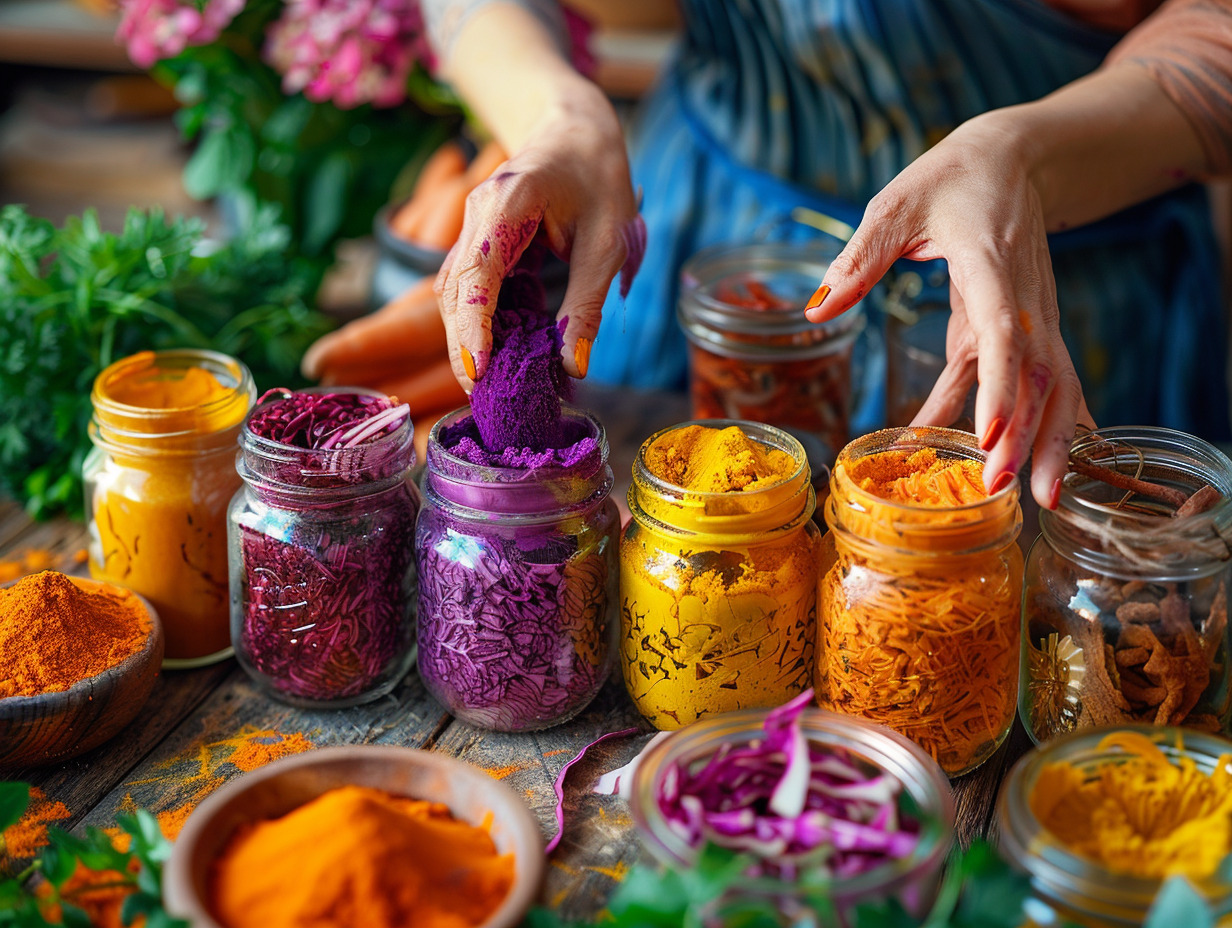
The possibilities for creating natural colorings are vast. Beetroot, for example, is a top choice for obtaining red hues. To do this, grate the raw beet and press it to extract the juice. This concentrated juice can be used as is or diluted according to the desired intensity.
For yellow shades, use turmeric. Mix turmeric powder with hot water to obtain a homogeneous liquid. The resulting color is particularly bright and works well for pastries.
- Purple: red cabbage is ideal. Boil the leaves in water for about 30 minutes. Strain the liquid and use it as a dye.
- Green: opt for mint or matcha tea. Infusing mint leaves or diluting matcha tea powder in water are effective methods.
For more subtle colorings, flowers such as hibiscus and lavender are perfect for infusions and decoctions. These techniques allow you to extract pigments without altering the delicate flavors of the flowers.
| Ingredient | Color |
|---|---|
| Hibiscus | Red |
| Lavender | Blue |
| Turmeric | Yellow |
| Red cabbage | Purple |
Melted caramel and paprika extract are also options for deeper shades. Caramel adds a brown color while paprika offers reddish-orange tones. Use these extracts in preparations like glazes or sauces for a striking visual effect.
To stabilize the colorings, white vinegar and baking soda can be added. These agents help maintain the intensity of the colors and prevent their degradation over time.