
Zalando sells products from brands with which the platform has direct business relationships or through authorized distributors. This model covers the majority of the catalog. The area of risk lies elsewhere: with third-party sellers listed on the marketplace and, especially, with fake sites that imitate Zalando without any connection to the platform.
Fake Zalando Sites: The Threat That Buyers Underestimate
The counterfeiting related to Zalando does not primarily occur on the official site. Since the end of 2024, French cybersecurity authorities have noted a proliferation of mirror sites that replicate Zalando’s design, logos, and interface identically.
These fake sites bear names like “Zalando Outlet” or “Zalando Permanent Sales.” They redirect payments to processors located outside the European Union, often in Central Asia or the Middle East. ANSSI and DGCCRF issued a joint alert on this phenomenon in February 2025.
Before placing any order, checking the exact URL of the site in the address bar remains the first reflex to adopt. The official domain is zalando.fr (or zalando-prive.fr for private sales). Any variation, even subtle (extra hyphens, unusual extensions like .shop or .store), indicates a fraudulent site.
Understanding the difference between genuine Zalando or counterfeit starts with this vigilance regarding the purchasing channel itself, even before examining the received product.
Third-Party Sellers on the Zalando Marketplace: Traceability and DSA Obligations
On the official site, Zalando distinguishes between two types of sales. Items sold directly by Zalando come from controlled stocks, with contractual relationships with the brands. Items sold by third-party sellers on the marketplace follow a different circuit.
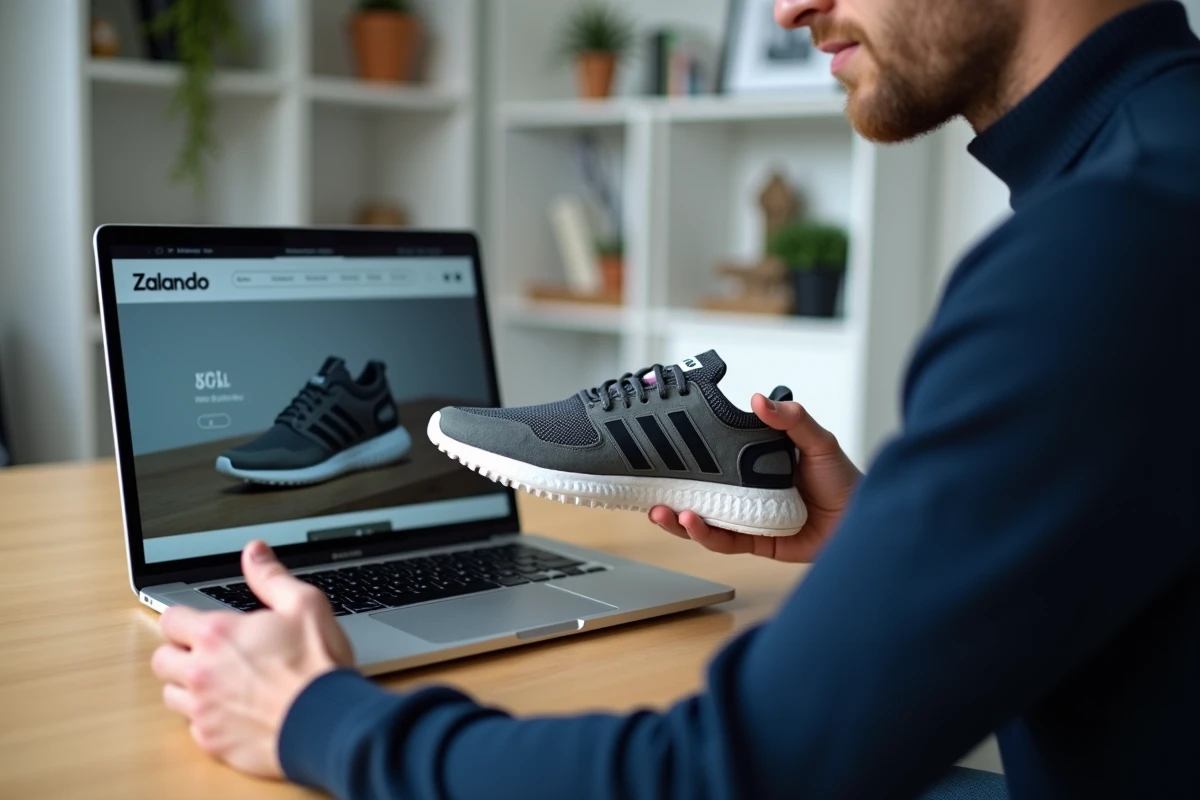
The European Digital Services Act (DSA), fully applicable to very large platforms since 2024, imposes enhanced traceability obligations on Zalando. Each third-party seller must provide verified contact information (KYC procedure). The buyer can identify the seller directly from the product page.
This traceability does not guarantee authenticity on its own, but it offers a concrete lever in case of disputes. An identifiable seller is an actionable seller, which deters the most blatant counterfeit resellers.
Points to Check on a Third-Party Seller’s Product Page
- The seller’s name and their country of establishment, displayed on the product page. A seller based in the EU falls under the European legal framework for consumer protection
- Customer reviews specific to the seller (not just the product). A new seller without an evaluation history warrants more caution
- The mention “Sold and shipped by Zalando” versus “Sold by [third-party name].” In the first case, Zalando takes its own responsibility for the product
Zalando’s Brand Protection Program and the Role of EUIPO
Since 2023, Zalando has strengthened its Brand Protection program in direct cooperation with several luxury houses through EUIPO (European Union Intellectual Property Office). This partnership allows Zalando to receive automated reports when questionable products bearing protected brands appear on the marketplace.
The concrete result: preventive withdrawals of listings even before a first sale is finalized. This mechanism differs from traditional reactive systems, where the platform only acts after a customer complaint.
This system does not cover all brands. Labels that have signed an agreement with EUIPO benefit from proactive monitoring. For brands not included in this program, detection still relies on manual reports from customers or the brands themselves.
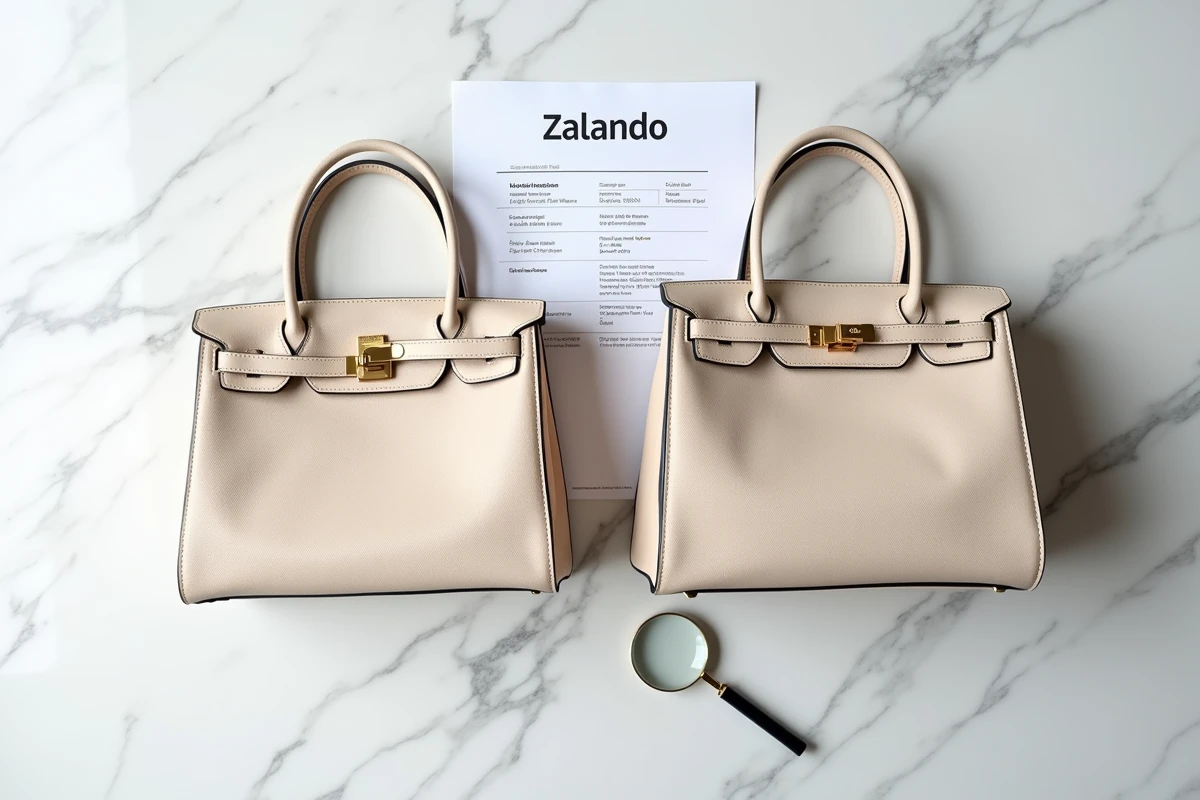
Concrete Signs of Counterfeiting on a Received Item
Even with upstream controls, doubts may arise upon receipt. Certain physical signs can help identify a copy.
- The inner label: blurry typography, spelling mistakes, absence of a reference number or precise textile composition. Authentic brands use specific fonts and a consistent label weight from one piece to another
- Sewing finishes: loose threads, irregular topstitching, linings glued instead of sewn. On premium brand items, the seams follow a regular pattern without excess thread
- Packaging and accessories: absence of a dustbag, generic cardboard without branding, photocopied or absent authenticity certificate. Some brands include NFC chips or QR codes verifiable via their official app
- The smell: synthetic leather counterfeits often emit a pronounced chemical odor that genuine leather does not have
What to Do After Spotting an Anomaly
Zalando offers a free return policy. In case of suspected counterfeiting, customer service handles the complaint and may initiate an internal investigation into the concerned third-party seller. Reporting the issue directly contributes to the seller’s removal if the checks confirm the doubt.
For high-value items, contacting the brand directly with detailed photos (label, logo, sole, closures) allows for obtaining an authentication opinion. Several luxury houses offer this service for free through their customer service.
The reliability of a purchase on Zalando depends less on the platform itself than on the type of seller and the channel used. Buying an item sold and shipped by Zalando offers a higher level of guarantee than purchasing from a recent third-party seller. Checking the URL before ordering, reading the seller information on the product page, and examining the item upon receipt cover almost all risks.