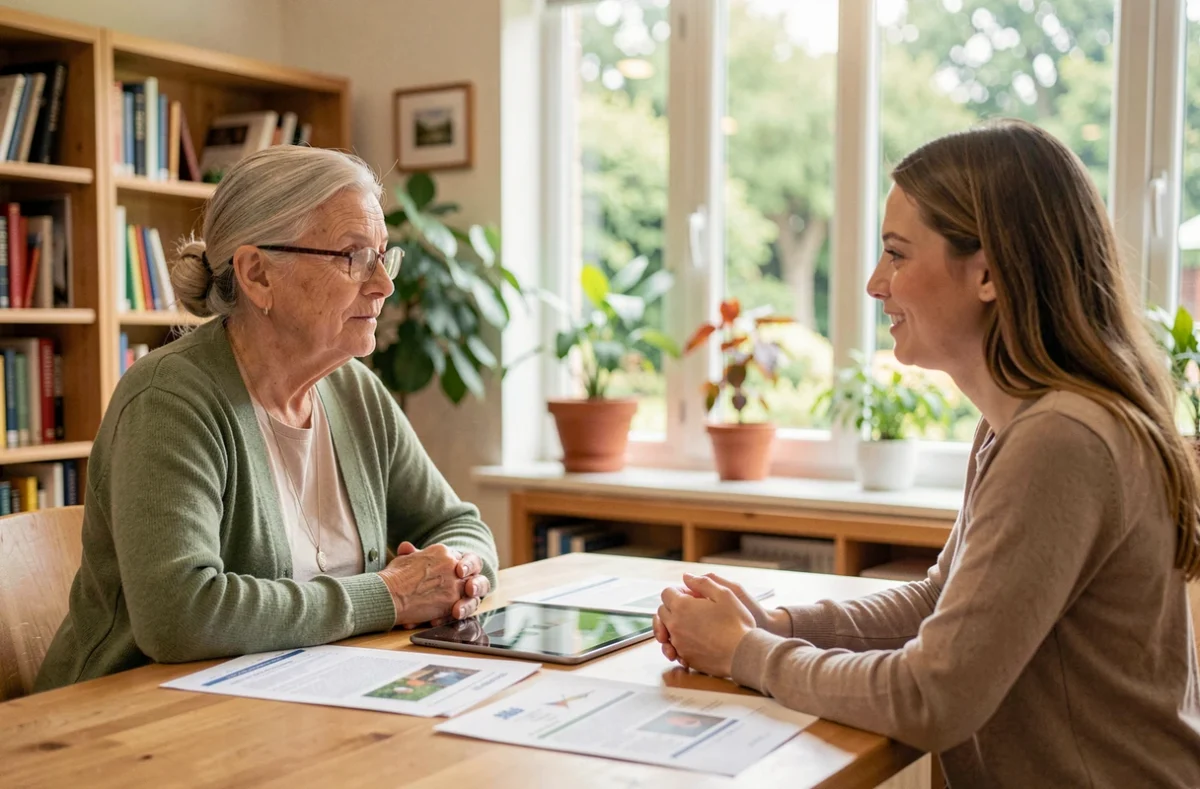
Personalized support for seniors refers to all the human and financial mechanisms that allow a retired person to maintain their autonomy and quality of life based on their individual situation. Far from a catalog of standardized services, this support relies on an individual assessment of needs, whether related to health, housing, social connections, or daily management.
Pricing of EHPADs and flat-rate participation: what changes for seniors in facilities
Since July 1, 2025, a reform of EHPAD pricing is being tested in 23 pilot departments. The APA in facilities is replaced by a unique flat-rate participation for the residents concerned. This change alters the usual framework for understanding the cost of medicalized accommodation.
For seniors who are weighing the options between staying at home, independent living, and EHPADs, this experiment makes comparison more complex. The remaining out-of-pocket amount is no longer calculated in the same way depending on the department of residence, which reinforces the need for personalized advice before any orientation decision.
At the same time, the project to transform EHPADs into “Maisons France Autonomie” aims to open these establishments to their territory: temporary reception, shared activities with local residents, links with local associations. In June 2026, however, the government clarified that this would not be a label or a uniform national specification.
Personalized support also involves the ability to analyze mechanisms that vary from one territory to another. Organizations like Aran Consulting specifically offer this type of guidance; you can learn more about Aran Consulting to understand their approach.

Home assistance for seniors: why usage is declining despite needs
Departmental home assistance has begun to decline in 2025. This trend does not reflect a decrease in needs. It rather reflects access, funding, or identification difficulties regarding available assistance.
Several factors explain this gap. Administrative complexity discourages some applicants. The processing times for home APA applications remain long in certain departments. And many seniors simply do not know about the existence of certain benefits they are entitled to.
Personalized support makes sense here: it is not just about finding a housekeeper or a caregiver, but about identifying the mechanisms suited to each situation.
- The APA (personalized autonomy allowance) at home finances part of the assistance hours based on the level of dependency assessed by a departmental medico-social team.
- Pension funds offer prevention workshops and occasional assistance (meal delivery, housing adjustments) for still autonomous retirees.
- The CCAS (communal centers for social action) direct individuals to often unknown local services: accompanied transport, friendly visits, memory groups.
- Mutual insurance companies and provident institutions develop their own programs addressing health, housing, or isolation issues.
The primary barrier to support is not financial, but informational. Many retirees miss out on concrete assistance due to a lack of a contact person capable of matching their personal situation with existing mechanisms.
Preventing loss of autonomy: spotting signals before dependency
Prevention remains the neglected aspect of senior support in France. Mechanisms exist, but they are often mobilized too late, when the loss of autonomy is already established.
The ICOPE program, supported by the World Health Organization and deployed by certain pension funds, offers an assessment of physical, cognitive, and sensory capacities. The goal is to detect functional decline before it becomes irreversible.
This type of assessment is not a heavy medical examination. It takes the form of a structured questionnaire, often doable independently or with the help of a healthcare professional. The result directs towards targeted actions: ENT consultation, adapted physical activity program, memory workshop.
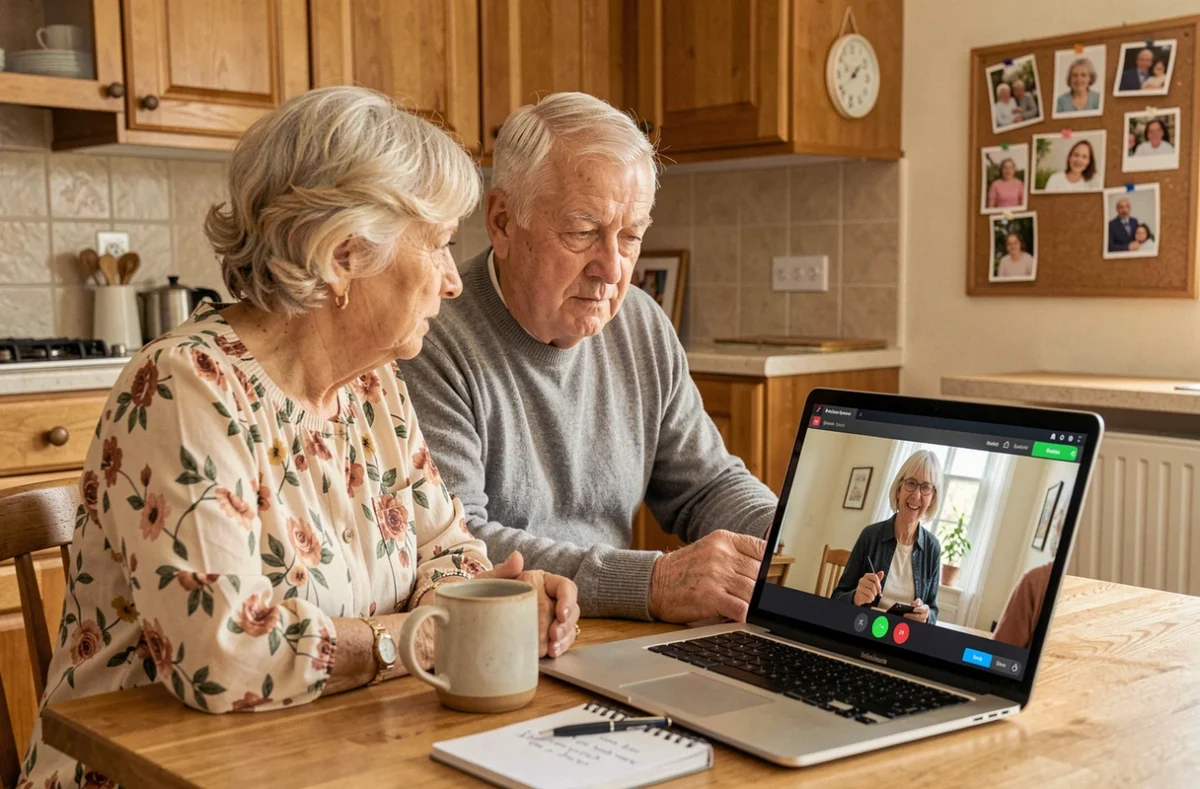
In practical terms, this means breaking down barriers between actors: the primary care physician, pension fund, departmental social services, and local associations must share information to avoid disruptions in care pathways.
Social isolation of retirees: an underestimated risk in support
Isolation is rarely addressed as a standalone support need. Yet it is a documented aggravating factor for loss of autonomy, depression, and cognitive decline among seniors.
This type of situation falls neither under medical care nor home assistance, but rather under structured social support. Many retirees experience loneliness as a fatality, without identifying the resources that could help them re-establish connections.
Responses exist, although they are scattered. Some pension funds finance friendly visits at home. Associations organize group outings or intergenerational workshops. Independent living residences, less known than EHPADs, offer a collective living environment without heavy medical care.
- Collective prevention workshops (balance, memory, nutrition) serve a dual purpose: health prevention and social connection.
- Some independent living residences offer activities open to local residents, creating a bridge between life in the facility and life in the community.
Personalized support for a senior is not limited to compensating for a loss of capacity. It incorporates the relational dimension, often the first to deteriorate after retirement, and the most difficult to restore once isolation is established.